About ADF
AdieUtabu Development Foundation (ADF) is a people-centred non-governmental organisation committed to advancing inclusive human development and holistic well-being across Africa. The Foundation prioritises the empowerment of underserved and marginalised populations by promoting equitable access to health, education, Research, agricultural innovation, and humanitarian support. Through its integrated and grassroots-driven approach, ADF tackles poverty, inequality, and systemic barriers that hinder social and economic development. The Foundation partners with communities, civil society, and institutions to deliver sustainable, rights-based solutions that uplift lives and transform futures.
AdieUtabu Development Foundation (ADF)
If you have any additional questions or concerns, please don’t hesitate to contact us.
Mission
ADF is committed to advancing rights and expanding opportunities for all by improving health outcomes, driving policy advocacy, promoting inclusive education, and enhancing agricultural development for underserved communities in Africa.
Core Values
Equity and Inclusion
Community Empowerment
Integrity and Accountability.
Sustainability and Innovation
Background
Across Africa, structural poverty, inequality, weak institutions, and recurrent crises continue to hinder inclusive development. The continent remains home to some of the highest burdens of ill-health, food insecurity, illiteracy, and displacement globally. These challenges are compounded by rapid population growth, gender disparities, climate change, and fragile governance systems (UNDP, 2023; AU, 2022). Vulnerable groups, including women, youth, and internally displaced persons (IDPs), are particularly affected, often lacking access to basic rights, services, and economic opportunities (World Bank, 2022).
In Nigeria, which represents Africa’s most populous country and largest economy, these continental trends are even more pronounced. Despite significant natural and human resources, Nigeria ranks low on most human development indices. The country faces deepening socioeconomic inequalities, a fragile health system, high out-of-school rates, widespread rights violations, and one of the world’s largest displacement crises (UNICEF, 2023; OCHA, 2023).
- Healthcare Access: Africa carries 24% of the global disease burden but has only 3% of the world’s health workers (WHO, 2022). In Nigeria, over 40% of the population lacks access to quality healthcare, especially in rural and conflict-affected areas. The situation is worsened by inadequate investment in primary healthcare, mental health neglect, and poor access to sexual and reproductive health (SRH) services (NPHCDA, 2022; WHO, 2021). IDPs and marginalised groups are disproportionately affected, with limited availability of mobile or integrated services (UNHCR, 2023).
- Education & Skills Development: Sub-Saharan Africa accounts for over 50% of the world’s out-of-school children, with girls, displaced youth, and rural dwellers being most affected (UNESCO, 2023). Nigeria alone hosts more than 10 million out-of-school children, primarily due to poverty, insecurity, early marriage, and inadequate infrastructure (UNICEF, 2023). There is also a growing mismatch between formal education and employable skills, especially for youth in underserved regions.
- Public Health Research:Africa continues to grapple with a high burden of preventable diseases, weak health systems, and insufficient public health infrastructure. Despite hosting 17% of the world’s population, the continent bears nearly 23% of the global disease burden, yet accounts for less than 1% of global health expenditure (WHO, 2022; The Lancet Global Health, 2021). In Nigeria, the most populous African nation, the situation is particularly dire. Inadequate investment in public health research has hindered the generation of local evidence necessary for designing context-specific health policies and interventions (Uneke et al., 2016). Data gaps, limited research capacity, and weak linkages between research institutions and policymaking frameworks continue to exacerbate Nigeria’s public health challenges.
- Agriculture & Nutrition: Although agriculture employs up to 60% of Africa’s workforce, productivity remains low due to outdated practices, land degradation, and climate vulnerability (FAO, 2021). In Nigeria, rural farmers, especially women, lack access to inputs, technology, and markets. Meanwhile, food insecurity affects 25 million people annually, and child malnutrition remains a major public health concern (UNICEF, 2022).
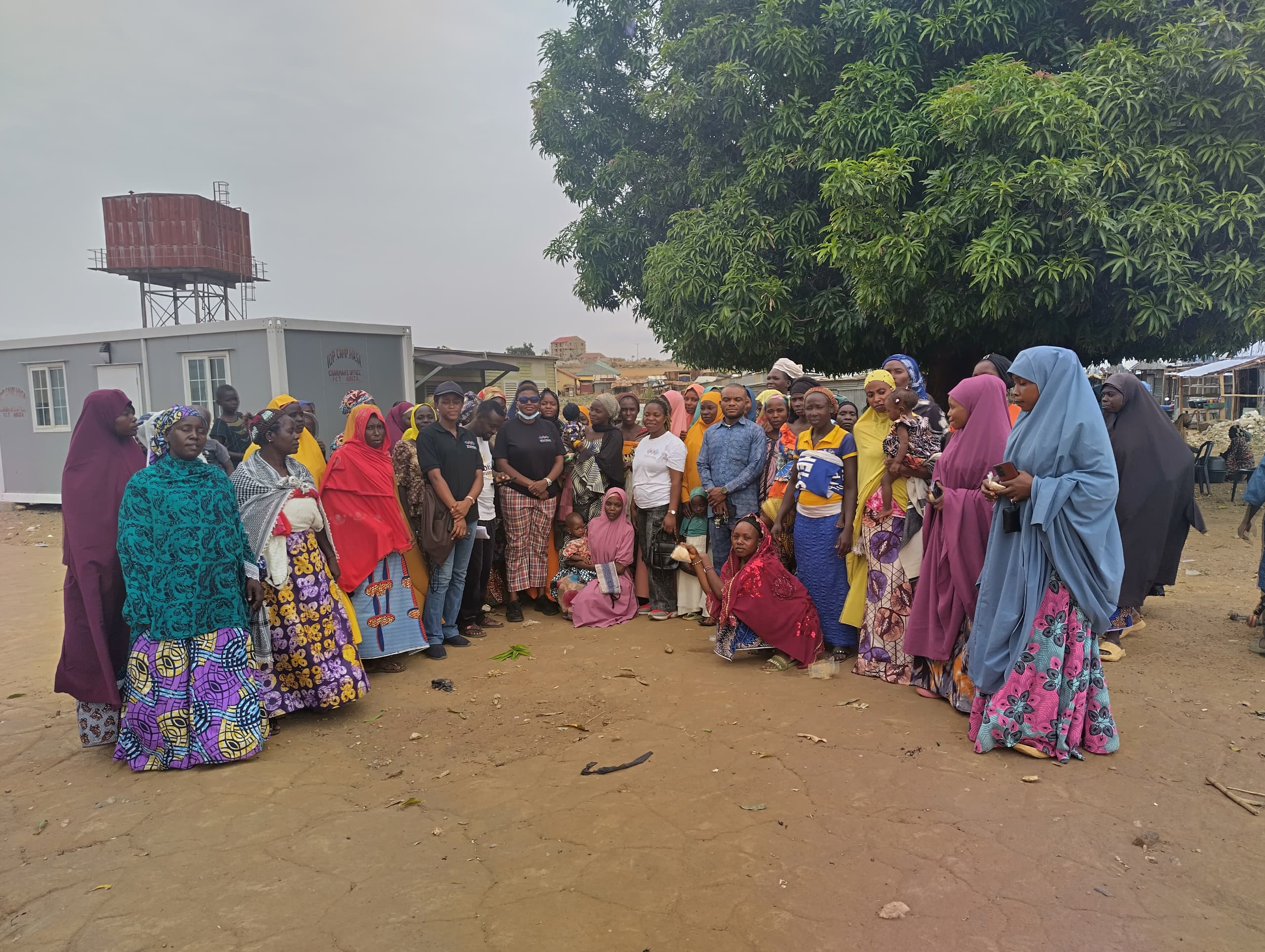
- Humanitarian & Resilience Support:Africa hosts over 30 million displaced persons due to armed conflict, drought, and disasters (IOM, 2023). Nigeria alone accounts for over 3 million IDPs, mainly from the North-East, with many living in overcrowded camps with limited services (OCHA, 2023). Beyond immediate aid, there is a pressing need for durable solutions, including psychosocial support, livelihood recovery, and resilience-building to prevent long-term dependency and marginalisation.
The strategic focus of the AdieUtabu Development Foundation (ADF) on healthcare, education, Research, agriculture, and humanitarian response is therefore both timely and necessary. These five thematic areas align with the Sustainable Development Goals (SDGs) and national development frameworks, including Nigeria’s National Development Plan (2021–2025). By investing in people-centred and rights-based development interventions, ADF aims to bridge systemic gaps, promote equity, and build resilient communities across Africa, beginning with Nigeria.
Main Goals
- Improving access to universal health coverage, including primary, mental, reproductive, and mobile health services for underserved populations, youths, and IDPs.
- Promoting inclusive education and vocational training for marginalised and displaced youths.
- Advancing public health research through community engagement and needs assessment.
- Enhancing sustainable agriculture, food security, and nutrition in rural and underserved areas.
- Supporting humanitarian aid for IDPs and vulnerable groups through the provision of essential services.
Sustainability Strategy
Local Ownership: ADF works closely with community leaders and beneficiaries in the planning, implementation, and monitoring of all programmes. This ensures cultural relevance, local acceptance, and shared responsibility. Community participation fosters transparency and accountability. Strengthening local ownership enhances sustainability and long-term impact.
Partnership Development: ADF works closely with government agencies, civil society groups, schools, universities, and international donors. These partnerships help to share knowledge, skills, and resources to improve project results. Working together makes it easier to reach more people and create a bigger impact. Strong partnerships also help build trust and long-term support for our work.
Capacity Building: ADF invests in training local staff, volunteers, and community members so they can take the lead in planning and running programmes. This helps build strong local leadership and ensures that the work continues even after a project ends. Training will include practical skills, teamwork, and problem-solving to improve how services are delivered. By building local capacity, ADF promotes self-reliance and long-term impact in the communities it serves.
Resource Mobilisation: ADF raises funds from different sources to support its work. This includes applying for grants, building partnerships with donors, encouraging local giving, and starting small income-generating activities. Having multiple sources of funding reduces the risk of relying on one stream and ensures steady support for our programs. This approach helps us grow and continue making a lasting impact in the communities we serve.
Monitoring,
Implementation Timeline: A phased five-year timeline is established to prioritise interventions, allocate resources efficiently, and ensure the timely delivery of results. Each year focus on scaling key components while integrating feedback from stakeholders.
Organisational Capacity Development: ADF invests in staff training, operational systems, governance structures, and knowledge management to ensure effective delivery of programmes and long-term institutional growth.
Financial Strategy And Sustainability
To achieve its five-year strategic objectives, the AdieUtabu Development Foundation (ADF) is committed to maintaining a sound and adaptive financial strategy. This financial framework ensures that resources are mobilised efficiently, allocated transparently, and managed sustainably to support the Foundation’s mission of inclusive human development and well-being across Africa.
Our Programme Cycle
ADF implements its model through a programme cycle:
Assessment → Design → Implementation → Monitoring & Evaluation → Learning & Scale-Up, all grounded in our core values of equity, participation, accountability, innovation, and sustainability.
- Assessment & Community Engagement: Conduct participatory needs assessments and stakeholder consultations to identify gaps and priorities.
- Program Design & Planning:Develop responsive, inclusive, and evidence-informed interventions aligned with local and national development priorities.
- Implementation:Deliver programs through direct implementation or in collaboration with local partners, ensuring quality and accountability.
- Monitoring & Evaluation:Track progress through performance indicators, gather feedback, and assess impact to inform decision-making.
- Learning & Scale-Up: Document lessons learned, share knowledge, and replicate successful models across other communities and states.
Our values
The pillars we stand by
Accesibility
we are committed to ensuring that our website is accessible to all individuals, regardless of ability or technology.
Integrity
Innovation
Objectives
To improve access to primary healthcare services in remote and underserved populations.
Objectives
To advancing educational opportunities for underserved youths/adolescent.
Objectives
To enhance sustainable agriculture, food security and nutrition in marginalized communities.
Objectives
To support vocational training, and skill development for youths and adolescents
Objectives
To strengthen policy advocacy for the advancement of human rights.
Join the team
Ac lorem rhoncus ut erat suspendisse. Integer id tincidunt curabitur sit purus.